Crane Tech Supports McKeesport Golf Fundraiser

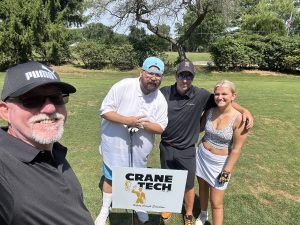
On August 2, Crane Tech sponsored Hole #18 at the McKeesport Tigers Golf Outing held at Butler’s Golf Course. This annual fundraiser helps the McKeesport High School golf team pay for training, equipment, and other needs during the season.

Four golfers pose together on the course next to a Crane Tech sponsorship sign at the McKeesport golf outing.

Crane Tech instructor, Bill Klingensmith, joins golfers at Hole #18 during the McKeesport Tigers Golf Outing. Proud to support student athletes and our local community!

One of our instructors joined the fun, representing Crane Tech both on the course and in the community. The event drew about 100 golfers and offered a great mix of competition, school spirit, and support for local students.

Crane Tech trains professionals in crane and rigging safety, but we also believe in lifting up future generations. Whether it’s in the field or at a fundraiser, we’re proud to invest in our community.

Safety through Education starts right here at home.

Not All Tons Are Equal: Why Shackle Markings Matter

When it comes to rigging hardware—especially shackles—understanding the markings on the gear is critical. One of the most common sources of confusion? The word and markings for “ton.” 

While it may seem straightforward, not all tons are the same, and if you’re not paying close attention, you could unintentionally exceed the safe working load. 

What the Markings Mean 

In the U.S., a short ton equals 2,000 pounds and is typically abbreviated as “T” on lifting hardware. However, many imported products—particularly those manufactured in Europe—use the metric ton, also called a tonne, which equals 2,204.6 pounds and is often marked with a script or lowercase “t.” 

Here’s a quick comparison: 

  • US Short Ton (T) = 2,000 lbs 
  • Metric Ton (t or tonne) = 2,204.6 lbs 
  • British Long Ton (LT) = 2,240 lbs (less common today, mostly historical) 

This subtle difference in markings can have major implications in the field. 

Examples from Top Manufacturers 

Here’s how the rated load capacity varies for a 1″ shackle depending on material and region. Add the complexity of “T” vs. “t,” and you can see how easily errors happen. 


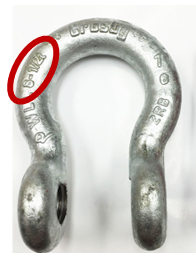
1" Crosby Shackle

This 1″ Crosby shackle shows the rating in metric tons using a “t”.

Crosby (U.S.) 


  • Carbon: 8 ½t = 18,739 lbs 
  • Alloy: 12 ½t = 27,558 lbs 
  • Note: Older Crosby shackles used “T” for short tons and a script “t” for metric. 


Columbus McKinnon (U.S.)

  • Carbon: 8 ½ T = 17,000 lbs 
  • Super Strong: 10 T = 20,000 lbs 
  • Alloy: 12 ½ T = 25,000 lbs 
  • Catalogs list both pounds and tons, but markings may vary. 

Van Beest Green Pin (Netherlands) 

  • Grade 6: 8 ½ t = 18,739 lbs 
  • Grade 8 “Super Bow”: 12 ½ t = 27,558 lbs 
  • These are always metric-rated and color-coded for grade. 

 Why It Matters 

If you mistake a metric rating for a U.S. ton—thinking a shackle marked “8 ½ t” is rated for 17,000 lbs instead of 18,739 lbs—you might miscalculate the limits of your rigging. A 10% difference might not seem like much, but in high-risk environments or multi-part lifts, that margin matters. 

And while this kind of misunderstanding might not cause a failure on its own, it can absolutely contribute to one—especially when combined with other factors like: 

  • Misestimated load weights 
  • Worn or mismatched gear 
  • Environmental stressors (wind, angle, temperature) 
  • Inconsistent inspection or verification procedures 

In practice, riggers should use this general rule of thumb: 

  • Use 2,000 lbs per ton when calculating shackle or hardware capacity 
  • Use 2,240 lbs per ton when estimating load weight 

It’s a conservative approach—and in lifting, a little extra caution goes a long way. 

Safety Standards to Know 

For those responsible for inspections or compliance, under ASME B30.26 and related sections, shackles used in lifting must display: 

  • Manufacturer’s name or trademark 
  • Rated load 
  • Size 

Additionally, the pin itself may also carry markings, such as the material grade, load rating, or manufacturer’s ID, which are especially important when verifying compatibility between shackle bodies and pins. If mismatched or unreadable, the pin may become the weak link—a major risk during lifting operations.  

These markings are critical for confirming capacity and ensuring traceability back to the manufacturer. But in practice, field conditions can make markings difficult or even impossible to read—especially after exposure to dirt, corrosion, paint, or years of wear. 

That’s why it’s essential to: 

  • Inspect shackles regularly for legible markings 
  • Remove hardware from service if identification is missing or unreadable 
  • Maintain supporting documentation (e.g., certificates, manufacturer specs) whenever possible 

In specialized environments like offshore, nuclear, or custom lifting applications, shackles may also carry a serial number for individual tracking and load test records. 

If your markings are gone, your confidence in capacity should be too. 

Final Takeaway 

Shackles may look alike, but the markings on them tell an important story—and that story includes which ton they’re using. With imported equipment common on job sites today, recognizing whether you’re working in short tons or metric tons isn’t just helpful—it’s essential for safe lifts. 

When in doubt, verify the marking, check the manufacturer’s specs, and default to the more conservative number. Safety through education starts with the details—right down to the markings on your gear. 

Need Help Interpreting or Inspecting Rigging Gear? 

Crane Tech offers hands-on training that teaches your team how to read shackle markings, verify load ratings, and inspect rigging properly—so you can lift with confidence and stay compliant. 

Call 1-800-290-0007 to speak with a training advisor, or visit www.cranetech.com to request a rigging gear inspection, schedule onsite rigging training, or enroll in an upcoming Qualified Rigger course. 

Safety starts with knowing your gear. We’ll make sure your team does. 

Instructor Spotlight: Jeff Ellis

Crane Tech Instructor, Director, and ASME Committee Member 

From the Field to the Front of the Room 

Jeff Ellis has spent decades in crane operations, rigging, and lifting safety—and just as many years shaping minds through hands-on, real-world training. With over 45 years of field experience and more than 20 years training others, Jeff brings unmatched credibility to the classroom. He’s a CCO Certified, a former crane supervisor at the Port of Charleston, and a veteran of the U.S. Navy’s Boatswains ranks. Today, he serves not only as a Crane Tech Director of Instructors, but also as a member of the ASME P30.1 Committee on Lift Planning —the industry’s most influential safety standards group— and a task force member for CCO’s Assembly/Disassembly guidance. 

Built on Real Experience  

Jeff has operated and inspected a wide range of equipment during his crane operator and rigging career, including mobile cranes, overhead cranes, container cranes, forklifts, aerial lifts, and rigging gear. His deep technical knowledge and field-tested experience make him a trusted resource for students and safety managers alike. 

But if you ask Jeff, titles and credentials are just one part of the job. The real work, he says, is changing behavior. 

“Teaching isn’t about making someone memorize a rule. It’s about helping them understand the ‘why’—so they take that knowledge into the field and apply it when it counts.”  

A Trainer Who Connects

Instructor leading students through load charts.His passion for training started early—though not always in a classroom. Jeff spent years operating cranes in shipyards, ports, and on bridge projects across the U.S. Before entering training full-time, he taught incidental crane use at the South Carolina Port Authority, where he discovered he preferred developing people over directing them. 

“I realized I liked training a lot more than supervising,” he says. “You get to meet people where they are, and if you’re doing it right, you can help them walk out safer, smarter, and more confident than they walked in.” 

That ability to connect is one of Jeff’s strengths. Whether he’s teaching a seasoned operator or someone brand new to the trade, Jeff brings the same clarity and commitment to every interaction. 

He’s known for drawing diagrams, telling stories, and breaking down complex material into practical terms. “Show your work,” he tells students. “I can’t help you fix a mistake if I don’t know how you got there.” That hands-on, real-world approach is part of what sets Crane Tech apart. 

Jeff also sets a professional tone in the room—not by lecturing, but by leading with respect. He makes it clear that while learning can be fun, it’s also serious work. “We’re not here to teach political science,” he says with a grin. “We’re here to teach cranes and rigging.” 

More Than Compliance—A Culture Shift  

Crane Tech’s approach goes far beyond test prep. Jeff sees every class as a chance to influence long-term habits—on the job site and off. 

“We’re not just running a course. If you let us, we’ll help you build a sustainable safety culture—one that actually saves time, money, and lives.” 

He emphasizes that true value comes not from checking boxes, but from shifting how crews think, communicate, and operate. 

Training With Purpose  

Jeff’s philosophy is rooted in personal experience. Over the years, he’s witnessed more than a dozen workplace fatalities—many preventable. Those moments shaped his commitment to meaningful, behavior-based training. 

“I’ve seen what happens when shortcuts get taken,” he says. “You can save 15 minutes on a lift and lose two weeks to cleanup—or worse. Doing it right the first time isn’t just safer. It’s smarter.” 

His respect for others and passion for safety also show up in how he runs his classes. Humor is welcome—off-topic distractions are not. He encourages discussion and challenges, as long as they lead to the right answer. “It’s not about who’s right—it’s about getting it right,” he says. “The best solution is the one that keeps people safe.” 

A Life Beyond the Classroom 

Jeff Ellis pictured with his wife Kimberly and granddaughter.Outside of work, Jeff is a storyteller, cook, and self-described knife  collector. He’s been married for 47 years, has two grown children, and beams when talking about his grandchildren. His travels have taken him to ports, platforms, and classrooms across North America—from refinery shutdowns to wind farms to military bases. 

What’s kept him going? The people. 

“Everybody has a story,” Jeff says. “If I can teach someone something that keeps them safe—and hear their story while I’m at it—I’ve done something worthwhile.” 

Ready to Train With the Best? 

Want to learn from experienced crane operator instructors like Jeff? Crane Tech delivers hands-on crane safety training designed to build skill, confidence, and a safer job site. 

Call us to get started. 

Back to School, Back to Training — and 10% Off!

The kids are headed back to school… maybe you should be too. If you’ve been thinking about signing up for a safety training course — whether it’s crane, forklift, or rigging — now is the perfect time. Crane Tech is offering 10% off all open enrollment programs when you register and pay in full between August 1–31, 2025.

Make the Most of This Opportunity 

You already know training is essential — for safety, for compliance, and for staying ahead. If you’ve had a course in mind, this is your chance to make it happen, with added savings for acting now. 

With our Back to School special, you can register for any Crane Tech open enrollment course through December 2025 — just call and pay in full by August 31 to take advantage of the offer. 

Eligible Courses Include: 

  • Prep for CCO CertificationInstructor leading students through load charts.  
  • Mobile Crane Operator 
  • Qualified Rigger 
  • Signalperson 
  • Forklift Operator 
  • Overhead and Mobile Crane Inspector
    …and more 

View the full training schedule here 

How to Register 

To secure your seat and apply the discount, give us a call at 1-800-290-0007. We can help you select your course; you pay in full to lock in the deal. 

Don’t wait — space is limited and this offer ends August 31! 


Terms of Back-to-School offer: 

  • Valid on open enrollment courses only 
  • Course must be scheduled between August 1 and December 31, 2025 
  • Must register and pay in full between August 1–31, 2025 
  • Discount applies to new registrations only 

What to Look for in Crane Operator and Safety Training

(And How to Choose the Right Partner)


The right training doesn’t just check a box—it builds a safer, more knowledgeable, skilled and capable team. Whether you’re hiring new operators or upskilling your workforce, knowing what to look for in a training provider can make all the difference. 

Here’s what separates high-quality training from the rest: 

Trainers with Industry Experience

Look for instructors who bring real-world expertise—not just credentials. The best training providers match the instructor’s background to your specific needs, whether you’re in construction, petrochemical, utilities, or another high-risk industry. They should know your equipment, understand your challenges, and be skilled in adult learning techniques. Ask for instructor bios and credentials to ensure a good fit. 

Make Sure Content is Current and Clear
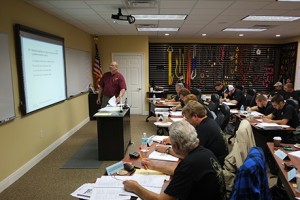
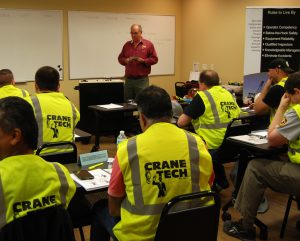
Instructor teaching classroom

Crane Tech keeps current on standards and requirements, so our clients don’t have to.

Training materials should be up-to-date with current OSHA, ASME, API, and other applicable standards. Outdated laws or references can lead to noncompliance, confusion, and safety risks on the job. Ask to review the curriculum outline to ensure that the content aligns with your team’s needs and expectations. 

High-quality materials are also clear and easy to follow. Look for structured lessons, supportive graphics, and formats that not only educate but help change behavior by reinforcing safe practices. 

Hands-On and Site-Specific

Effective training connects directly to the work being done. Look for providers who tailor instruction to your environment—delivering courses on-site, using your equipment, and focusing on job-specific scenarios. When workers practice tasks in a realistic setting, they’re more likely to carry those habits back to the field. Hands-on training supports skill development, builds confidence, and reinforces safe behavior that leads to better decision-making and safer outcomes.  

Assessments That Strengthen Safety AND Compliance 

Not all training includes meaningful evaluation. Ask how the provider measures whether learning objectives are met. Are assessments tied to job roles and learning goals? Can the results support employer qualification decisions? Does the provider identify knowledge gaps you can close through toolbox talks or mentoring? The best training doesn’t just track scores—it helps reinforce safe habits, reduce risk, and support ongoing behavior change.

The right assessment tools can reduce risk, reinforce key concepts, and help ensure regulatory compliance.  

Choose Programs That Focus on Knowledge 

Avoid programs that rely solely on memorization. Effective instruction helps workers understand why something matters and how to apply it. To do this, training should encourage questions, adapt to each learner’s pace, and foster critical thinking. 

It’s not just about knowing the answer—it’s about making the right call when it counts. That shift from knowledge to confident, safe behavior is where good training delivers lasting value. 

Training that Drives Behavioral Change

At Crane Tech, we’ve long said: “Knowledge alone isn’t enough. It’s behavior that keeps job sites safe.”

That’s why our training is designed to do more than inform—it’s built to change the way people think, act, and respond in real-world situations. We focus on why safety procedures matter, how small shortcuts can lead to serious outcomes, and what it looks like to make the right choice, every time. 

Behavioral change is the foundation of a strong safety culture. And it starts with training that connects knowledge to action.  

Why It Matters

Poor training leads to real consequences: incidents, injuries, equipment damage, and lost productivity. Investing in training that changes behavior reduces risk, strengthens performance, and protects people, property, and profits. 

How Crane Tech Delivers

Since 1977, Crane Tech has provided expert-led training to thousands of professionals across the U.S. and abroad. Our instructors are carefully matched to your industry, equipment, and learning goals. Our materials are designed for clarity and built to align with OSHA, ASME, API, and other relevant national safety standards. 

We go beyond attendance-based programs—offering real-world assessments tied to learning objectives and job functions. These assessments can support employer qualification decisions and help ensure your team is truly prepared. Plus, our detailed reporting highlights exactly where trainees struggled, so you can reinforce key safety messages in toolbox talks or safety briefings. 

Our courses focus on comprehension and application, not just memorization. We apply adult learning principles, use realistic scenarios, and pace instruction to meet learners where they are. Instructors encourage questions, promote engagement, and provide one-on-one support to help learners not only understand safety—but practice it until it becomes habit. 

Whether you’re pursuing certification, looking to qualify your team, or need construction and safety training tailored to your jobsite—Crane Tech is ready to help. 

Let’s Build a Safer Team Together. 

Contact us today to learn how we can support your safety goals. 
Crane Tech’s Expert Knowledge
NCCCO

Proudly Offering Training for CCO Certification


We offer a turn-key service for training and CCO certification testing. We will handle all training and CCO paperwork, processing, and testing for one low fee. Call today and find out how easy CCO Certification can be with Crane Tech Service.


Our Clients

[logooos_saved id="657"]
Get a Quote
Questions? Call Us!