



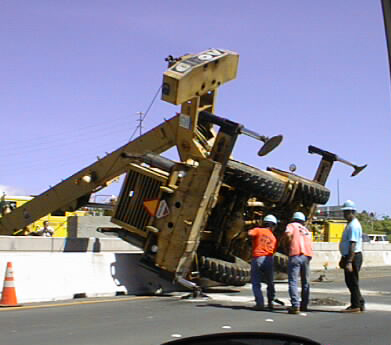
 For many years, there were only two positions where mobile crane outriggers could be used for applications of crane ratings:
- All outriggers fully deployed and set.
- Outriggers not deployed or set.
However, modern cranes have changed dramatically and this includes how their outriggers can be configured. To make sure we are on the same path: never has any crane manufacturer approved “on outrigger” ratings when all outriggers were not EQUALLY deployed and set to specification. No manufacturer ever allowed only one, two, or three of four outriggers set at any location to determine a crane’s safe rating. It was not uncommon, for an operator working in tight quarters to position outriggers at different locations in order to level the crane and to refer all lift capacities to the more conservative On-Rubber load chart. Seemingly the safe approach to ensuring that any loss of stability would be prevented by the outriggers being set, providing a little support regardless of their actual configuration. After all, the ratings being used were conservative for on-rubber lifts only, right? Wrong! (more…)

 Search for a quote on knowledge and you will find thousands of responses from greats such as Ben Franklin, Albert Einstein, Horace Mann and Plato. We instinctively know that the more information we are exposed to, the more opportunities we have to learn.
 As a training company we understand that our own training is a key element to success. During the week of November 23, Crane Tech set aside three days to bring our trainers and staff together for meetings with the theme of Consistency and Quality are Key.