
The Real ROI of Safety Training: Fewer Injuries, Lower Costs, Stronger Teams

Owners and managers often try to “do more with less.” Workplace safety training can feel like a line item to trim until an incident stops production, drives up insurance costs, or sends a good worker home injured. The truth is simple: safety protects both profit and people.

The return on investment (ROI) of safety training is measured through fewer injuries, lower workers’ compensation costs, reduced downtime, and stronger workforce performance. When employees understand hazards and supervisors reinforce safe practices, incidents decrease and operations run more smoothly. 

According to the National Safety Council, in 2023 alone (the most recent report available), work injuries cost U.S. employers $176.5 billion in lost wages, productivity losses, medical expenses, and administrative costs. Even one claim can wipe out a quarter’s profit for a small business. That’s money that could have funded payroll, equipment, or growth. 

What the data shows about workplace injuries 

Private employers recorded 2.5 million nonfatal injuries and illnesses in 2024; fewer cases than 2023, but still a major operational and financial burden for many employers. In 2024, employers reported 888,100 cases involving days away from work, with a median of 8 lost workdays per incident. Even a single injury can remove a trained employee from the job for more than a week, or much longer in severe cases. 

Forklifts and fall protection are repeat OSHA Top 10 citations—meaning real exposure, real fines, and preventable incidents.  

The risks most likely to impact your operation are significant: 

  • Contact with objects/equipment: 756 deaths in 2024; a leading source of serious lost-time cases.  
  • Forklifts: 84 deaths (2024) and 25,110 serious DART cases (2023–2024). Both increased from previous reporting periods. 

These facts are not theory. They come from national datasets, insurance indexes, and real-world studies. Training is one of the most direct ways companies can mitigate these costs without slowing growth. 

Why small businesses can’t afford to NOT invest in safety 

Small businesses often feel the impact of incidents the most. Even one claim can erase an entire quarter’s profit for a small business. OSHA’s $afety Pays tool shows the real financial impact of an injury. It estimates direct costs (medical, insurance) and indirect costs (overtime, retraining, delays). It also calculates how much extra sales you need to break even. 

Example: 

  • Direct cost: $20,000 
  • Indirect cost (ratio 1.1): $22,000 
  • Total cost: $42,000 
  • Sales to break even: 
    • At 10% margin → $420,000 in new sales 
    • At 5% margin → $840,000 in new sales 

Run the numbers for your operation and profit margin. It’s a quick way to show leadership why safety pays. 
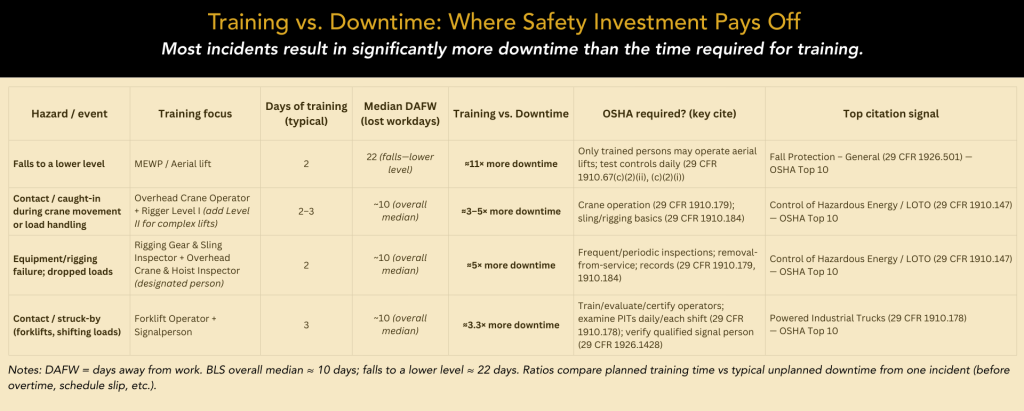
Comparison chart showing workplace safety hazards, typical training time (2–3 days), and resulting downtime from incidents (10–22 days), demonstrating that safety training significantly reduces operational downtime and risk.

This comparison highlights how quickly training time is offset by the potential downtime from a single incident.


Where safety training investments pay off fastest 

Focus first on programs where OSHA already expects training/qualification and where incidents are common and costly, even where a national certification isn’t required. 

Forklifts (Powered Industrial Trucks)

  • Perform a pre-use inspection daily (each shift for 24/7 operations). (OSHA 29 CFR 1910.178(q)(7)) 

Why it pays: avoids struck-bys, tip-overs, and property damage; forklift incidents remain a significant source of severe cases. 

Aerial lifts (MEWPs) & Fall Protection 

  • Test controls each day prior to use. (OSHA 29 CFR 1910.67(c)(2)(i)) 

Why it pays: Many incidents occur during setup, repositioning, or when entering and exiting the platform. Training on stability, fall protection, and site hazards helps prevent serious injuries and costly errors. 

Overhead cranes & hoists 

  • Conduct frequent inspections (daily to monthly) and periodic inspections (monthly to annually) of overhead cranes and hoists. Employers should assign a designated person responsible for inspections and maintain inspection records. (OSHA 29 CFR 1910.179(j)29 CFR 1910.184) 

 Why it pays: Identifying wear or damage in hooks, slings, wire rope, brakes, and controls early helps prevent dropped loads, equipment damage, and costly shutdowns.  

Rigging & inspector training 

  • Perform a pre-use inspection of rigging gear each shift, remove defective equipment from service, tag out defects, and document corrective actions. (OSHA 29 CFR 1910.184(d); ASME B30 standards as applicable) 

Why it pays: Recognizing worn slings, bent hooks, or damaged hardware before a lift helps prevent incidents and protects equipment.  

Signalperson 

  • Employers must ensure signal persons are properly qualified to give hand or voice signals and recognize load hazards before directing crane operations. (OSHA 29 CFR 1926.1428) 

Why it pays: Clear, consistent signals reduce crane miscommunication during lifts and help prevent struck-by and caught-between incidents.  

Safety for managers (front-line leaders) 

Why it pays: Supervision turns training into daily habits and helps build a strong safety culture. When supervisors review the work, verify inspections were completed, and communicate hazards clearly, crews make fewer mistakes and work continues without costly interruptions. (OSHA Recommended Practices) 


Make safety improvements affordable: a simple 90-day plan 

  1. Pick two high-exposure areas to start (for many, that’s Forklift and Inspection programs). Train operators and your “designated” personnel. Put daily checklists in place. 
  2. Train your leaders/supervisors on basics: pre-task talks, verifying inspections, fixing hazards, and documenting corrective actions. 
  3. Track a few leading safety indicators for 60–90 days: near-misses, defects identified and corrected, training completions, and inspection compliance. Review results monthly. 
  4. Show the financial impact: Re-run OSHA $afety Pays with your profit margin and share the “sales to break even” number along with incident trends. 

 What a strong safety program looks like 

  • Operators are trained and evaluations are documented. Pre-use checks occur before the first lift or drive. 
  • Cranes/hoists receive frequent + periodic inspections on schedule, with a designated person assigned and records maintained. 
  • Supervisors address hazards promptly and review key safety indicators each month. 

The bottom line: safety training protects both people and profit 

Investing in safety leads to lower injury and workers’ compensation costs, fewer delays, stronger retention, and better performance. The data is clear, and the path is practical for operations of any size. Start with your highest-exposure areas, strengthen supervisor oversight, measure what matters, and share results in both dollars and incident rates. 

Why safety training matters for OSHA compliance 

OSHA requires employers to ensure workers are trained and qualified for many high-risk tasks, including operating forklifts, rigging loads, working at heights, and signaling crane operators. Safety training helps employers meet these obligations while reducing the likelihood of costly incidents. 

Not sure where the biggest safety gaps are in your operation? We can help. 

Many companies want to improve safety but are not sure where the biggest risks or compliance gaps exist. An independent review can provide that clarity. 

Crane Tech offers safety consulting services that provide an independent OSHA-style safety assessment of your operation. Our team reviews equipment, procedures, training records, inspections, and work practices to identify gaps that could lead to incidents or regulatory issues. 

These reviews are conducted strictly as a private consulting service. Nothing is reported to OSHA. You receive a detailed report outlining gaps and recommended corrective actions so you can prioritize improvements. 

Once gaps are identified, Crane Tech can help address them through inspections, consulting, and training programs. We can: 

  • Perform equipment inspections and lifting gear inspections
  • Train your team to conduct rigging gear and equipment inspections beyond daily checks
  • Provide crane operator, rigging, signalperson, and safety training programs
  • Help establish inspection programs and documentation systems 

Since 1977, Crane Tech has worked across virtually every industry—from manufacturing and oil and gas to construction, maritime, and pharmaceutical operations. 

Call us at 1-800-290-0007 or visit cranetech.com to learn more. 
Introducing Crane Tech’s Expanded Safety Services: Safety Consultations, Inspections, and Compliance Program Support

Crane Tech is excited to announce the launch of our expanded Safety Services Division, strengthening the ways we support you as a full-service safety partner. We’ve built these services on the same real-world expertise our customers rely on. With this expansion, we now offer additional ways to enhance safety performance, simplify compliance, and support your operation from every angle.

Why We Expanded Our Safety Services

For years, Crane Tech has supported clients with one-off safety consultations, inspections, and written program evaluations. As demand for these services grew, more companies began asking for broader support, especially with OSHA/ANSI compliance preparation, safety program improvements, and keeping equipment inspection-ready.

To meet that need, we expanded and formalized our Safety Services. This allows us to provide consistent, full-cycle safety support for all clients, backed by the same practical expertise and field experience Crane Tech is known for.

Our Expanded Safety Services Include

  • Safety consultations that identify opportunities for improvement and reduce risk across lifting and rigging, fall protection, and general safety

  • Inspections of cranes, rigging, fall protection, ladders, and safety equipment aligned with OSHA, ANSI, and ASME requirements

  • Safety program support, including written program evaluations, policy and procedure reviews, and documentation alignment

Together, these offerings help companies build safer, more compliant, and more confident operations.

Get Started With Crane Tech Safety Services

Whether your organization needs training, inspections, or broader safety program support, we’re here to help. To get started—or to discuss how our expanded Safety Services can support your team—contact us at inspections@cranetech.com or 800-290-0007.

We look forward to supporting your operation with these expanded Safety Services and continuing to serve as your trusted safety partner.

Why Shop-Made Rigging Puts Your Crew and Loads at Risk — and What to Do Instead

When it comes to rigging, every link in the chain matters …. literally. While shop-made rigging might seem like a quick, low-cost solution, it often comes from good intentions such as:

  • Budget pressure — Avoiding the cost of new equipment by reusing materials on hand.
  • Lead time issues — Needing a solution when certified rigging isn’t readily available.
  • “We’ve always done it this way” — A belief that homemade gear works fine because it’s been used before without incident.

The problem? Without design engineering, controlled manufacturing, and proof testing, homemade rigging introduces unknowns that can jeopardize safety, damage equipment, and result in costly OSHA rigging requirement violations.

The hidden dangers of shop-made rigging

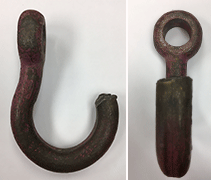
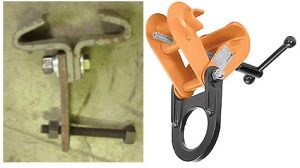
A shop made device found at a client’s location and the commercially available product. Can you see a difference? Which would you trust for overhead lifting?

Unlike manufactured rigging, which is designed, tested, and rated by qualified engineers, shop-made rigging is typically assembled from spare parts or modified components. This means:

  • No rated load capacity — Without a manufacturer’s tag or identification, there’s no way to verify its safe working load limit.
  • Unknown material integrity — Parts may be worn, corroded, or otherwise compromised.
  • No proof of compliance — OSHA and ASME require rigging to meet specific design and testing standards.
  • No inspection criteria — Without known specs, inspections become guesswork.

Why markings and testing matter

Markings and proof testing aren’t just paperwork — they’re the foundation of safe lifting.

  • Markings (such as WLL, manufacturer name, and material type) allow the user to confirm the equipment is rated for the load.
  • Testing verifies that the equipment can handle its rated capacity without deformation or failure.
  • If required to be load tested, must have a serial number and appropriate documentation.

Without these, you couldn’t be sure of compliance.

What OSHA and ASME say

OSHA 1926.251(a)(4) prohibits the use of rigging without permanently affixed and legible identification markings.

ASME B30 specifies manufacturing and testing requirements for all rigging.

If rigging doesn’t meet these requirements, it’s not just unsafe — it’s non-compliant.

How to spot shop-made rigging

During rigging inspections, watch for these red flags:

  • Not identified and capacity unknown
  • Welded, spliced, or bolted components of unknown origin
  • Non-compliant fittings or hardware
  • Mismatched parts from different assemblies

If you find any of these, remove the rigging from service immediately and tag it “Do Not Use.” These cannot return to service until a qualified person has approved for use.

Best practices for safe rigging

  • Purchase from reputable suppliers that deal with load-rated equipment.
  • Inspect before each use for wear, deformation, or missing ID tags.
  • Remove questionable rigging from service immediately and tag it.
  • Train your crew to recognize proper rigging products.
  • Know and understand OSHA and ASME requirements.

Why training matters

Even the best rigging equipment can be dangerous in the wrong hands. Crane Tech’s Qualified Rigger courses covers rigging gear selection, inspection, and proper use — so your crew can identify hazards.

Don’t wait for an OSHA citation, or worse, an incident to find out your rigging isn’t safe.

Call us at 800-290-0007 or complete our quote form to schedule your Qualified Rigger training today.

Instructor Spotlight: Bruce Johnson

From high rigging to safety culture change

Bruce Johnson didn’t start in a classroom. He started in the late ’70s as a high rigger, walking steel where a mistake could be fatal. Later, he moved into the crane rental world and ultimately led safety, environmental, and DOT programs for a major rental company with one of the largest crawler fleets in North America. His mandate: build real, relevant training and make it stick.

At the time, safety culture was far more talk than practice. Bruce helped change that. He designed in-house programs, rolled out companywide rigging and signalperson training, and went through the full CCO Certification pathway himself, eventually becoming authorized to administer practical exams. The results were business-level: his teams drove their Experience Modification Rate (EMR)—the workers’ comp risk score that directly affects premiums and prequalification—from 3.0 to well below 1.0, backed by stronger OSHA logs, documented training, and better field performance. For Bruce, training wasn’t a checkbox; it was the engine for better numbers, fewer incidents, and ultimately, better business.

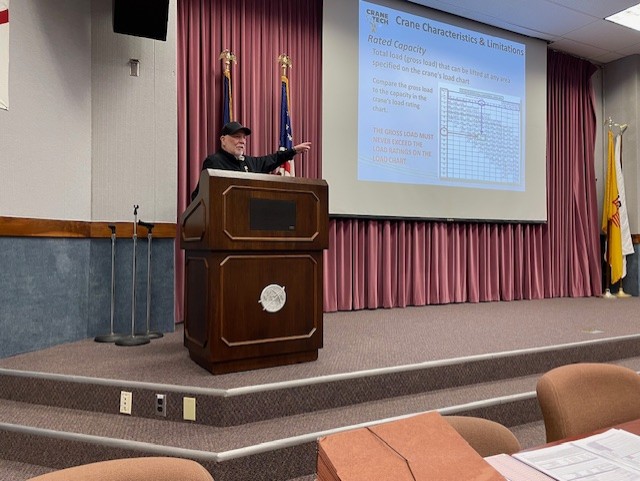
Bruce Johnson at a podium presenting to crane and rigging studentsToday at Crane Tech, Bruce teaches what he lived. He leads mobile crane operator training and overhead crane training and also teaches aerial lift (MEWP) and forklift operators, crane inspection, signalperson, and rigging Levels 1 & 2. His approach is plainspoken and practical. He uses both the “book” terms and the field terms because crews need to pass written exams and recognize language in standards (OSHA/ASME B30), but they also need to communicate clearly on the job with mechanics, supervisors, and contractors who use everyday slang. Matching both vocabularies cuts confusion, speeds handoffs, and prevents errors when the pressure is on.
He simulates real workflows with whatever equipment a site can safely provide and insists on mastery of fundamentals before advancing: pre-use checks, smooth load control, drift management, communication, and clean documentation. If a student needs more practice, Bruce stays after with targeted coaching until the skill is there.

Ask him about “lightbulb” moments and he’ll talk about small skills that cascade into big wins. Teaching rigging crews to tie five basic knots, for example, flips a switch. Suddenly taglines are everywhere, hands stay off loads, and near-misses drop. That’s behavioral change, not just a passed test.

Bruce also brings a leader’s lens. He’s frank that safety programs succeed only with top-down buy-in. When production and safety are framed as opposites, he sees a management gap, not a field problem. His advice to supervisors: set clear expectations, document evaluations (1926.1427(f) for operators), and reinforce ASME B30/OSHA requirements with the why behind each step. Do that, and performance follows: fewer first aid and reportable incidents, faster, cleaner prequalification with clients, and equipment that lasts longer because it’s inspected and used correctly.

What do students remember? The stories told of real-world decisions, near-misses that didn’t have to happen, and the practical rules that prevent them. What do clients notice? A trainer who can translate standards into field habits their crews will use on the very next shift.

Outside the yard, Bruce is a sci-fi fan with a deep interest in history (ancient Rome and Japan) and a budding content-creator’s studio at home. That curiosity shows up in class: he meets seasoned pros with respect, invites questions, and makes the material feel relevant – because it is.

Want to train with experts like Bruce? Call 800-297-0400 or get a quote at www.cranetech.com/quote.

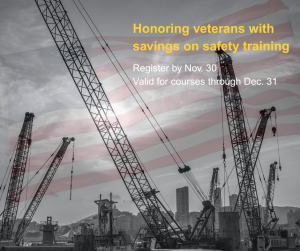
Honoring Veterans With Savings on Safety Training

This Veterans Day, Crane Tech proudly recognizes the dedication and service of those who have worn our nation’s uniform. Veterans bring leadership, discipline, and a safety-first mindset to every job. We’re honored to support your next chapter in the crane, rigging, and load-handling trades. 

This November, we’re offering exclusive savings for U.S. military veterans on our open-enrollment safety training—including Mobile Crane Operator, Qualified Rigger, Forklift Operator, and Overhead Crane Inspector, and more. 

“Crawler-crane booms on a job site with a subtle American flag overlay and a dark text panel announcing Veterans Day training savings for U.S. military veterans.Veterans Day Training Discount

Register by Nov. 30; valid for classes scheduled through Dec. 31.

Here’s what you can save: 

  • $100 off any 1-, 2-, or 3-day program 
  • $250 off a 4-day program (or multiple courses taken in the same week) 
  • $500 off the 3-week Professional Operator Development (POD) program 
  • $750 off the 4-week Professional Operator Development (POD) program 

Note: Promotion is for U.S. military veterans. Discount cannot be applied to CCO certification prep classes. 

What is POD? 

Crane Tech’s Professional Operator Development (POD) programs are immersive, multi-week tracks that build strong foundations for safe crane operation. Topics include mobile crane operation safety, crane set-up and ground stability, extended load chart exercises, operator aids and LMIs, crane component inspection, wire rope (types and inspection), hands-on load control, lift planning, crane assembly/disassembly, requirements of standards and regulations, emergency procedures, and Qualified Rigger Level 1. 

Important details 

  • Offer valid Nov. 1–30, 2025 
  • Applies to open-enrollment classes scheduled through Dec. 31, 2025 
  • Register by Nov. 30, 2025 to receive the discount 
  • How to redeem: When you call or submit the quote form, mention you’re a U.S. military veteran and ask for the Veterans Day discount. Our team will apply it before payment. 

Safety through Education. We’re proud to provide cost-effective training that supports veteran careers in the crane and rigging trades. 

Ready to get started?
Call 1-800-290-0007 to speak with a Training Advisor, or view the course schedule. 

Crane Tech’s Expert Knowledge
NCCCO

Proudly Offering Training for CCO Certification


We offer a turn-key service for training and CCO certification testing. We will handle all training and CCO paperwork, processing, and testing for one low fee. Call today and find out how easy CCO Certification can be with Crane Tech Service.


Our Clients

[logooos_saved id="657"]
Get a Quote
Questions? Call Us!